Rome Tourist Scams: What a Roman Taxi Driver Wants You to Know
Let’s start with some honesty: this isn’t a Rome problem.
Every capital city in the world has people working out how to take money off visitors. What changes is the specialisation — each city develops its own particular trade.
So here’s what Rome has become good at, told by our friend Nico, who has spent his working life driving people around this city and watching it happen.
Pickpockets: the one he won’t stop talking about
Start here, because Nico is unequivocal about it: the pickpockets in Rome are genuinely, seriously skilled.
Not opportunists. Trained. You will not notice.
And note the distinction he draws, because it matters for how you feel about walking around here: Rome doesn’t really have muggings. Nobody is going to threaten you. What Rome has is people who can take something out of your pocket while you’re looking at a fountain.
His method, and he repeats it more than once:
Carry very little cash. Fifty to a hundred euros maximum. Wrap the notes around your credit card.
Front pocket of your jeans. Always. Not the backpack. Not the back pocket — of your trousers or your jacket. The front pocket, where you can keep a hand near it.
If your trousers have a zip pocket, use it.
Check it constantly. Pass your hand over it as a reflex, until it becomes a habit for life. His words: this isn’t a Rome thing, it’s a world thing.
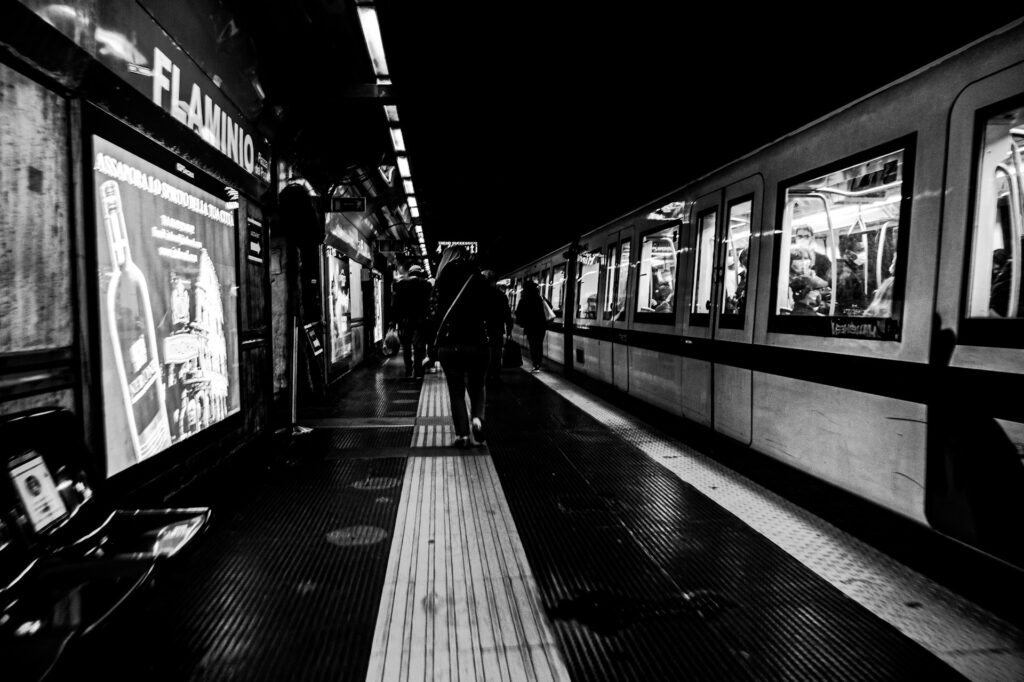
And leave your documents at the hotel. The probability of someone getting into your room is far lower than the probability of a pickpocket on the metro.
The three-card game: you cannot win
The card game. The little ball under the cup. Guess where the object is.
Romans love running this one, and Nico wants you to understand the mechanics, because once you see it you can never unsee it.
A typical setup has seven or eight people gathered around the table. One or two of them are the marks — the tourists. Everyone else is a plant.
Every single one. The person who just won. The excited guy urging you to bet. The couple who seem to be passing by. All of them.
These are money factories. Nico’s estimate: a thousand to twelve hundred euros a day, clean, undeclared.
You cannot win. Not sometimes. Not with luck. The game is not a game.
Where you’ll find them: never right under the Colosseum, never directly in front of Piazza Venezia. They set up in the central spots that are slightly blind — the corner of Piazza Venezia rather than the middle of it. Somewhere that catches the eye without being fully in view.
The fake centurions
You’ll see them near the monuments, dressed as Roman soldiers, ready for a photo.
Some are licensed. Many are a man who got up in the morning, put on a costume, and now wants ten to fifteen euros from you for a picture — which, as Nico points out, is already a lot of money for a photograph.
How to tell: the official ones have a proper costume, cared for in the details. The other kind you’ll recognise immediately once you’re looking.
And there’s a point here Nico feels strongly about: that money isn’t declared. You’re funding what we call the sottobosco — the undergrowth — rather than the people who get up in the morning, work ten hours in the sun, and pay their taxes.
His view, and we share it: after a while you can just tell who’s honest and who isn’t. Even people without a suspicious bone in their body can see it.
Bracelets and street sellers
Someone approaches you with a bracelet. Friendly. It’s a gift.
They tie it on your wrist, and then they want five or ten euros for it. And now it’s on you, and taking it off in front of them is awkward, and that’s the entire mechanism.
Nico’s rule is simple: buy from shops with a shutter.
Buy from official stalls. Buy from actual shops. Don’t buy from people selling in the street — they don’t pay tax, and they’ll overcharge you anyway.
The clipboard people
Walk through Rome and at some point you’ll meet the con artists in the fluorescent vests.
They’ll spot you while you’re strolling, relaxed, not thinking about anything. Usually there are three of them: one sitting behind a small table with papers spread out in front, and two more mobile ones who come towards you.
Towards the prey. And you are the prey, if you haven’t been warned.
The hook is empathy. They’ll open by asking whether you’re on holiday — and believe us, they already know the answer. It’s just their way of getting into conversation with you.
Then comes the petition. The causes vary and they’re always chosen to work on your humanity: rehabilitation clinics for drug addicts, children in Africa, terrible illnesses.
But there’s only one objective, and it isn’t your signature. Your cash is the only target. If you let yourself be drawn into the conversation, they’ll hit it without you noticing.
Here’s the rule to remember: real charity doesn’t come looking for you. You’re the one who knows where to give.
We’re not tarring everyone with the same brush — there are genuine associations out there campaigning and mobilising for serious causes, not to take a few euros off you. But when you see this specific pattern of three, set up in the big squares like Piazza del Popolo or right by the Vatican, understand that it may all be a pretext to get you to donate something that goes straight into their pockets and never serves the purpose they described.
The two-menu trick
This one is rare. Nico is honest about that — it’s uncommon that you’ll be handed a menu with different prices from the next table’s.
But it happens. Some places pick out the customer they think will fall for it and hand them a menu with three or four euros more on every dish.
Do the maths: ten items ordered, and that’s fifty euros extra on your bill. And that’s the honest version of the scam.
The worse version is the place that doesn’t bring you a menu at all, then tells you what you owe. You pay, because what else are you going to do.
So the rule is absolute: always ask for the menu. Ask for it in Italian if you can. And insist that prices are displayed, clearly and visibly — because in Italy that’s the law, not a courtesy.
(More on reading a restaurant before you sit down: how to spot a tourist-trap restaurant.)
Tours sold on the street
Someone offers you a Vatican tour. Eighty euros for five people. They hand you a ticket, and give you a time and a meeting point for tomorrow.
Tomorrow you stand there in the sun, and nobody comes.
Nico’s take on what you actually lost: more than the money, you lost a day of your trip. And in a city this size, a day is worth more than eighty euros.
Book through official sites. That’s the whole rule.
Money: the legal scam nobody warns you about
Two things here. The second one will cost you more than every other scam in this article combined.
First, the simple one: count your change. Every time, everywhere. Nico raises this specifically about currency exchange, and it holds generally — a fast hand and a distracted tourist is an old combination.
And on that: avoid the currency exchange kiosks altogether. The rates are poor by design, especially in tourist areas. Use an ATM belonging to an actual bank instead.
Now the one that actually matters.
When you pay by card in Italy, the terminal will often ask you a friendly-sounding question: “Would you like to pay in dollars, or in euros?”
Always choose euros. Always. Every single time.
Choosing your home currency triggers something called Dynamic Currency Conversion, where the merchant’s provider does the conversion instead of your bank — at their own exchange rate, with a markup built in. That markup typically runs 3% to 12% of the transaction, and an investigation across eleven countries found increases from 2.6% up to 12%, with reported cases as high as 18%. One study put the average cost at around 7.6% — more than double what you’d pay letting your own card handle it.
On a €1,000 holiday, that’s up to €120 gone. On every coffee, every dinner, every museum ticket, quietly.
It’s completely legal. It’s offered as a convenience. And it’s the most expensive mistake most visitors to Rome will make — without ever knowing they made it.
If you drive: the mirror scam
This one is for anyone thinking of renting a car, and it comes with a warning attached.
The wing mirror scam is very widespread in Rome.
Here’s how it works. You’re driving, or you’re stationary at a crossing. Someone throws themselves at your car — a tourist, or more often a local who knows exactly what they’re doing — and claims you hit them. Sometimes it’s a mirror they say you clipped. Sometimes it’s a person on a pedestrian crossing you never even touched, because you were stopped.
And if you don’t speak the language, proving otherwise is extremely difficult.
Rome is a genuinely complicated city to drive in, so the accounts often sound plausible to anyone assessing it. If they’re good at this — and this is a practised scam — they’ll extract money from you.
Nico’s own advice on this, unprompted: wear a small camera.
A pair of camera glasses, or one of the small clip-on cameras that attaches to your shirt. Your own point of view, recorded. He raises it specifically because without the language, your word against theirs is not a fair fight.
Our practical addition to Nico’s advice: if you’re hiring a car, ask the rental company for a dashcam, or bring one. It does exactly the same job — an objective record of what happened — without any of the questions that wearable cameras raise about filming people. Same protection, no ambiguity.
But really: don’t drive in Rome
Having said all that, Nico’s actual recommendation is simpler.
Don’t take the car at all.
Rome is a beautiful city and you don’t need one. Unless you’re leaving Rome to tour the rest of Italy, there’s no reason to drive here.
And even then — use the car to get from point A to point B, from your hotel in Rome to your hotel in Florence. Don’t use it in the historic centre of any Italian city.
Not because you should take taxis or scooters instead. Because these are beautiful cities and they’re best seen on foot. Rome is the largest city in Italy and the richest in monuments, but most other Italian cities can be walked comfortably in half a day.
Drive in Rome and you’ll just be enormously stressed. It makes no sense. This city is meant to be walked.
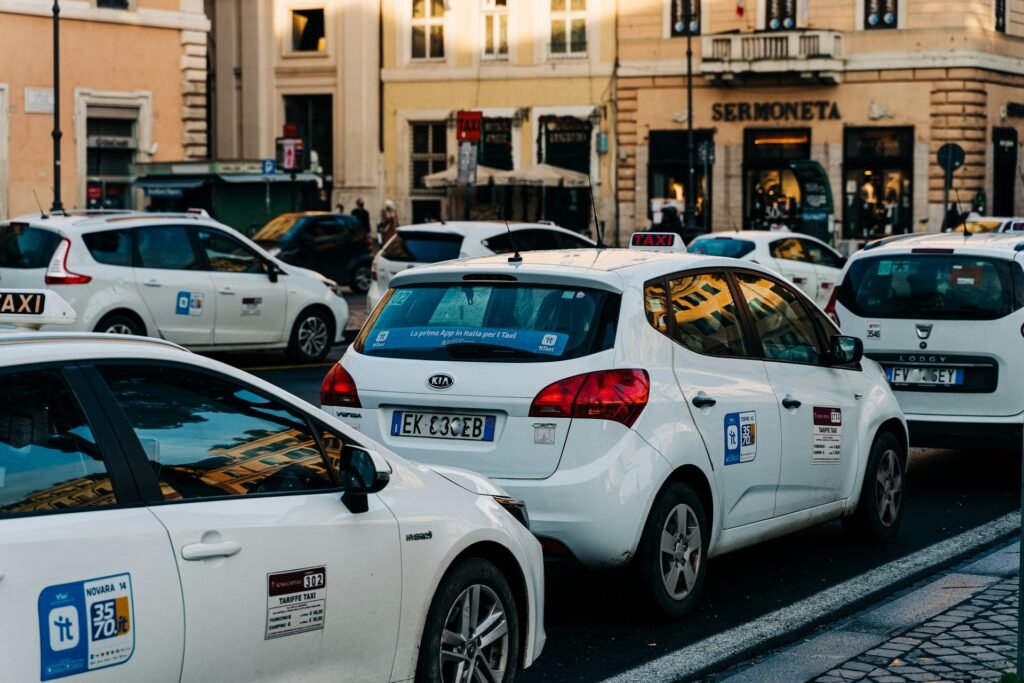
Official taxis, briefly
Nico covers this in detail in our article on taxi scams, but the essentials:
Official taxis have an internal meter. Anywhere you travel within Rome, the meter runs. There are fixed fares only for the nearest airports and the port of Civitavecchia.
Within the city of Rome, it’s the meter, exclusively. If you’re travelling outside the metropolitan area, the price is negotiated — but agreed before you set off. That’s how it should be done.
A rough guide from him: on a busy day in Rome, budget two to two and a half euros per kilometre, plus what you already see on the meter when you get in.
The biggest mistake a tourist makes in Rome
We asked Nico directly. His answer wasn’t any of the above.
It’s coming here and not informing yourself.
And he’s careful to say it isn’t a Rome problem — it’s true of any city, anywhere.
So before you go somewhere, read about it. Learn what’s normal and what isn’t. Everything above becomes almost trivially easy to avoid the moment you know it exists.
That’s the whole point of this site.
The short version
- Pickpockets, not muggings. Rome doesn’t have street robbery — it has extremely skilled thieves
- €50–100 in cash, wrapped around your card, in your front pocket. Check it constantly
- Leave your documents at the hotel
- Three-card game: most of the crowd are plants. You cannot win
- Fake centurions: €10–15 for a photo. Look at the quality of the costume
- Don’t buy from street sellers. Shops with a shutter, official stalls
- Always demand a menu with displayed prices. It’s the law
- Never buy a tour on the street. Official sites only
- Clipboard petitions: three people, fluorescent vests, big squares. Real charity doesn’t approach you
- Always pay in euros, never in dollars or pounds. The card terminal’s “convenience” costs 3–12%
- Skip currency exchange kiosks — use a real bank’s ATM. And count your change
- The mirror scam is common if you drive — so don’t drive in Rome. If you must, get a dashcam
- Taxis: meter always, inside Rome. Fixed fares only for airports and Civitavecchia
- The biggest mistake: arriving uninformed
Common questions
Are there a lot of pickpockets in Rome?
Yes, and they are skilled. But Rome doesn’t really have street robbery — nobody will threaten you. Keep €50–100 in cash wrapped around your card in your front pocket, and leave your documents at the hotel.
Should I pay in euros or in my own currency in Italy?
Always euros. When the card terminal offers to charge you in dollars or pounds, that convenience carries a markup of roughly 3–12% on every transaction. Over a week’s holiday it adds up to real money.
Can you win the three-card game in Rome?
No. Never. Of the seven or eight people around the table, only one or two are the marks — everyone else is working there, including whoever just won in front of you.
More real Rome, one honest tip at a time — callmeitaly.com