Rome Street Food Guide: How Romans Actually Eat on the Go
Most street food guides give you a list. We want to give you something better first: the reason Rome eats this way at all.
Because street food here isn’t a trend that arrived with food trucks and Instagram. It’s older than that, and it comes from somewhere real.
Where it comes from: the rosticceria
Long before anyone called it street food, Rome had the rosticceria.
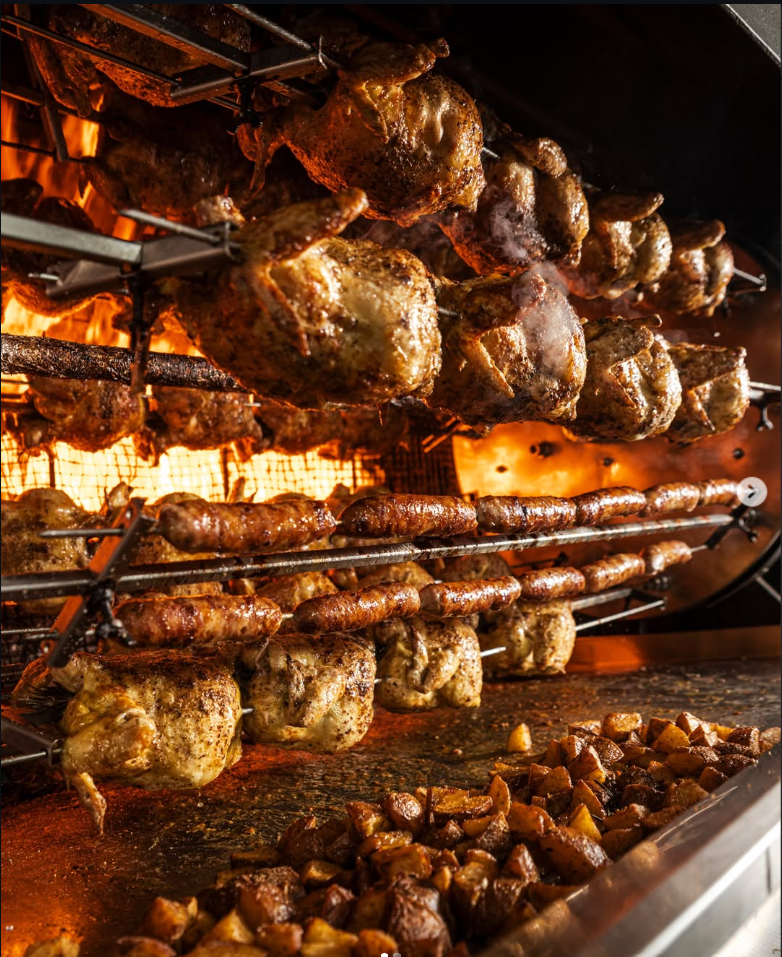
You know them by the window: the roasting spit turning slowly, the chickens going golden, the smell reaching you before you get to the door. Those places fed millions of families in this city. You’d stop on the way home, pick up a roast chicken and some potatoes, and dinner was solved. Simple, honest, affordable.
That’s the root of it. Rome has always been a city comfortable with food you carry away with you.
What we have today is that same instinct, version 2.0. The choice has exploded — you’ll find healthy bowls, deep-fried everything, even a proper plate of fresh pasta served to eat standing up. In many ways it’s a step forward for the whole business.
But here’s the honest part: you don’t always find the simplicity and the reliability you could count on back then. More options doesn’t automatically mean better. Which is exactly why choosing the right place matters.
When Romans eat street food
Not as a novelty. As a solution.
Most of the time it’s the day itself pushing you into it — you’re caught in the rush, there’s no time, and street food is the first option that makes sense. For plenty of us, that’s several times a week. It’s normal life, not a treat.
Which is precisely why we’re picky about it.
How we choose: clean first
Our first filter is simple and it isn’t negotiable: the place has to be clean and well presented.
Not fancy. Not designed. Just clean, in a way you notice the moment you look at it.
And notice what we’re not saying: it doesn’t have to be Instagrammable. Sometimes the most photogenic spot — the one built for food pics — doesn’t match on quality. The camera and the kitchen are two different things. Look at the counter, not the lighting.
The evergreen: pizza al taglio and supplì
If you want the one thing that is pure Roman, unchanged, and completely ordinary in the best sense, it’s this: a slice of pizza and a supplì, eaten on your feet.
Often as an afternoon snack. Often with no occasion at all.
Pizza al taglio is pizza sold by the slice, cut from long trays, priced by weight. Point at what you want, tell them how big a piece, and they’ll weigh it.
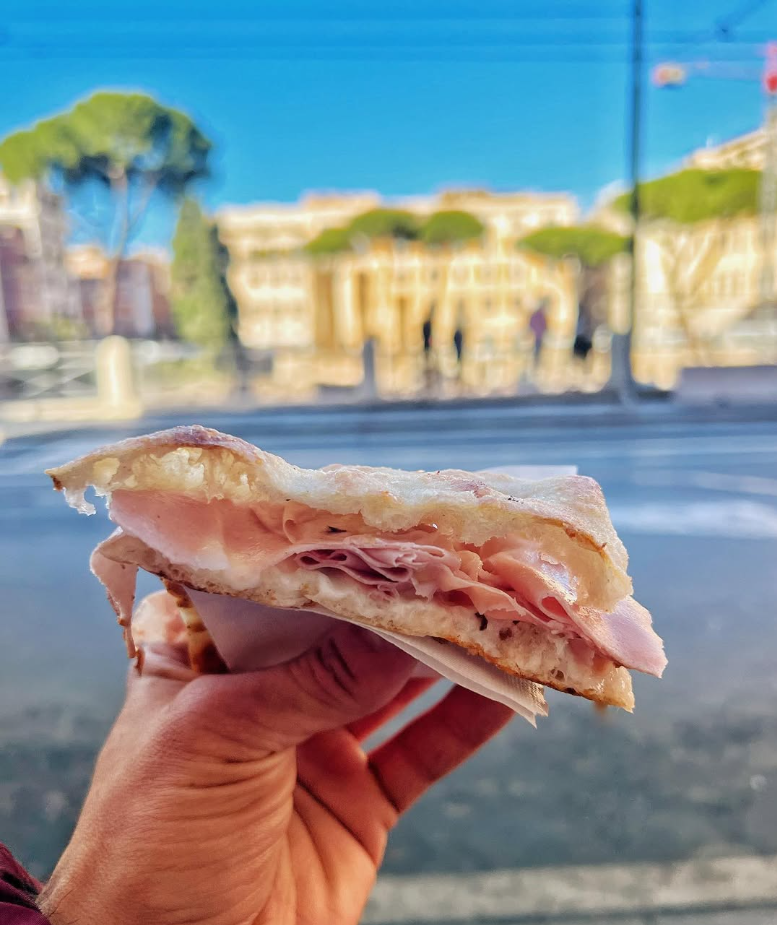
And the one to ask for is pizza bianca con la mortadella. White pizza — no tomato, no cheese, just dough, oil and salt — split open like a sandwich and filled with slices of mortadella. That’s it. That’s the whole thing. It costs very little and it is, to us, the most Roman snack there is.
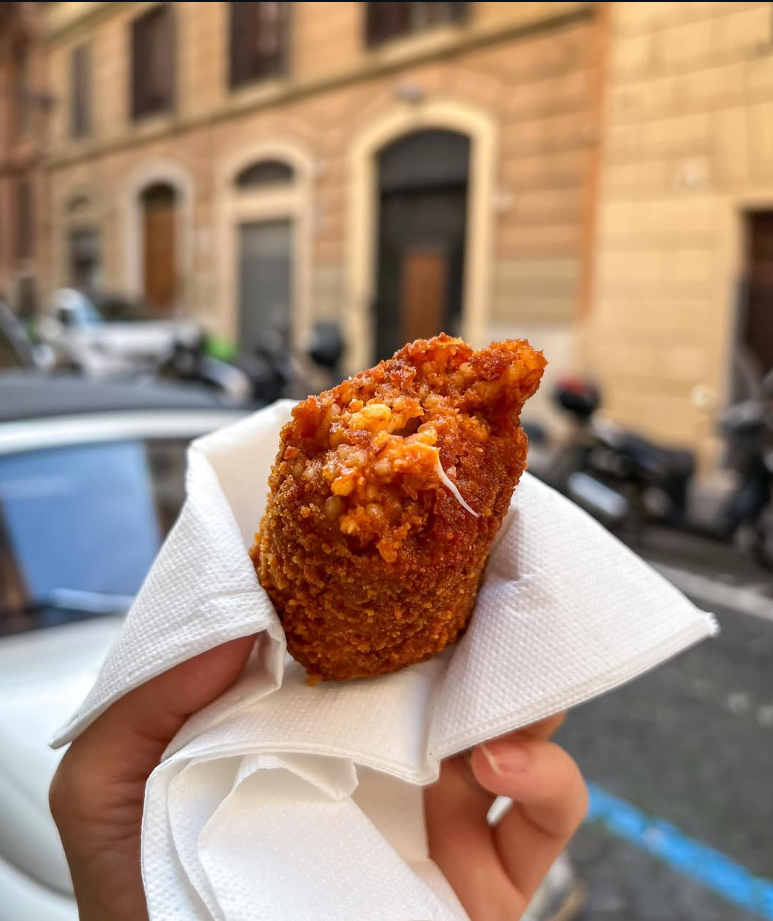
Supplì is a fried rice ball with tomato and a heart of mozzarella that pulls into a string when you bite it. That’s the whole test — if it doesn’t stretch, someone got lazy.
What kind of Roman are you if you don’t stop for a good supplì or a piece of pizza bianca with mortadella?
Nico’s picks: three places worth your time
Our friend Nico spends his working life driving around this city, which means he eats on the go more than anyone we know. These are the three he sends people to.
Piazza Risorgimento — proper Italian sandwiches
Classic panini, and here’s what makes them good: nothing is cooked. No hot fillings, no fuss — just cured meats and cheeses, the way an Italian sandwich is supposed to be. (An egg turns up in one or two of them, and that’s the only exception.)
Artichoke cream, olive cream, fresh salad, and a serious range of Italian cheeses.
Price: roughly €6.50 to €9. The most expensive one, with cured meat, touches €10.
Trapizzino — the real Roman one
A trapizzino is a triangular pocket of soft focaccia, cut open and filled with the things Roman kitchens actually cook: meatballs in tomato sauce, chicken cacciatora, abbacchio, Genovese pesto — they even do tongue.
It’s the bridge between street food and a proper home-cooked plate. If you try one thing from this list, make it this.
Pasta in Corso — a real plate of pasta, fast
Fresh pasta with four or five sauces, and the speed comes from the ingredient itself: fresh pasta cooks in four or five minutes, no more. The sauces are prepared on site.
Price: around €8 for cacio e pepe. About €10 gets you the plate and a bottle of water — then you’re back out exploring.
Nico’s verdict, word for word: that €8 cacio e pepe was better than the one he’s had in some Trastevere trattorias. We’re inclined to agree.
The short version
- Rome’s street food comes from the old rosticcerie — it’s tradition, not trend
- Today there’s far more choice, but not always the old reliability
- Clean and well-kept beats photogenic, every time
- The untouchable classics: supplì, and pizza bianca with mortadella
- Nico’s three: Piazza Risorgimento for panini, Trapizzino for the real Roman bite, Pasta in Corso for pasta on the move
Eat standing up. Nobody here will think less of you.
Common questions
How do you order pizza al taglio in Rome?
Point at the tray and show the size you want with your hand. They cut it with scissors and weigh it. The price on the label is per 100 grams, so nobody can tell you what “a slice” costs — you decide.
How much does street food cost in Rome?
Pizza al taglio runs about €20–25 per kilo, so roughly €8 for a proper lunch portion. A supplì is around €2, and a classic Italian panino sits between €6.50 and €9.
What is a supplì?
A fried rice ball with tomato and a heart of mozzarella that pulls into a string when you bite it. That stretch is the test — if it doesn’t stretch, someone got lazy.
Still got a question about Rome? Ask a Roman — we answer the good ones on the site.
More real Rome, one honest tip at a time — callmeitaly.com