The Best Time to Visit Rome: A Roman Taxi Driver’s Answer
We asked Nico — who drives a taxi in this city and watches the tourist season rise and fall from behind the wheel — one simple question.
When should someone come to Rome?
He didn’t hedge. He gave us a date range.
From 20 September to 15 October.
Here’s his reasoning, and the full year as he sees it.
Why late September into October wins
Three things line up in that window, and they rarely line up together.
The weather lets you walk. You’ll be on your feet six, seven, eight hours a day in this city. That’s the whole experience. In that window the sun stops hammering, and walking stops being an endurance test.
The crowds have thinned. September is busier than October, but neither compares to the summer peak. You’ll find a restaurant. You’ll find a taxi immediately. The city gives you room.
The evenings arrive earlier — and that’s a good thing. Instead of light until half past eight, it starts fading around seven. After a full day in the sun, that shift matters more than you’d think.
What to actually expect, so you can pack:
- Late September: 24–26°C during the day, dropping to 14–16°C at night
- Early October: 23–25°C by day, 14–16°C after dark
- Late October: 17–20°C by day, 10–13°C at night
So: light clothes for the daytime, and something with sleeves for the evening. That’s the whole packing brief.
And here’s Nico’s own observation, which you won’t find in the guidebooks. Looking at the last five or six years, summer in Rome has stretched. It no longer ends in mid-September — it’s extended by nearly three weeks. So by 10 or 15 October you still get genuinely good weather, and you can still go out in a light top.
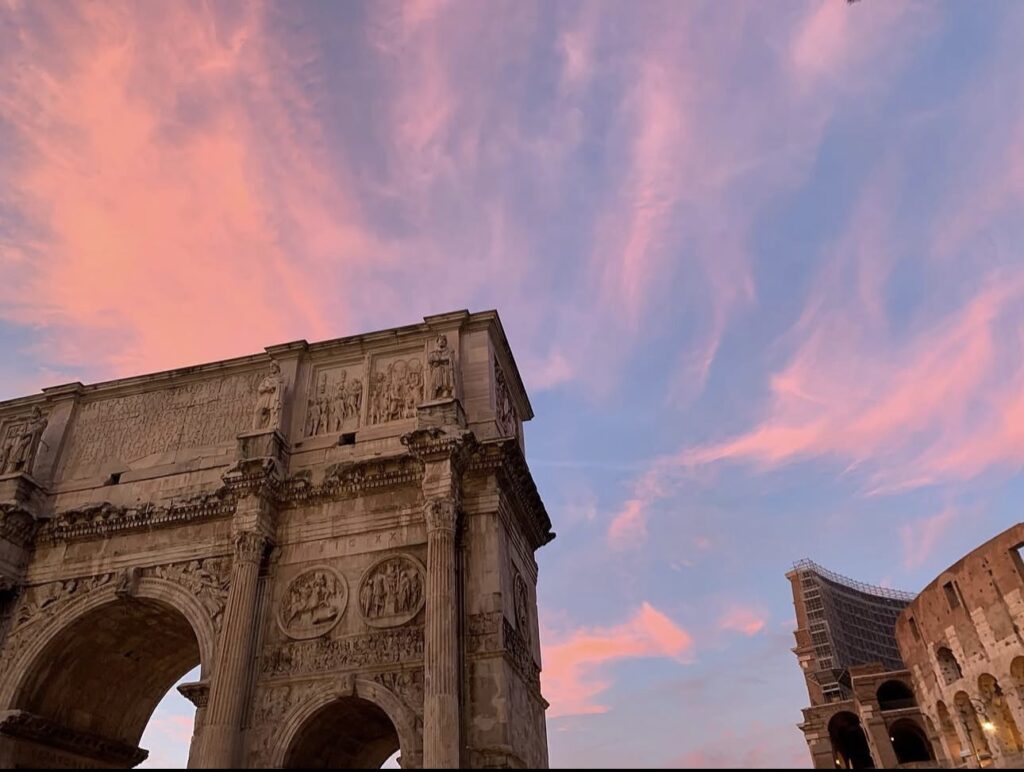
There’s a Roman word for exactly this, and it’s much older than the recent warming: ottobrate. It describes those bright, warm October days that feel closer to summer than to autumn, and they’re most common in the first half of the month. When the scirocco blows up from the south, an ottobrata can push 28–30°C — in October.
Nico noticed the pattern from the driver’s seat. The language noticed it centuries ago.
A short history of the ottobrata, because it’s better than you think
Here’s the thing: ottobrata didn’t start out as a weather word. It was a party.
Until the early 1900s, October in Rome meant the end of the grape harvest — and Romans celebrated it properly. Every Thursday and Sunday morning, small caravans set off from each district and headed out of the city walls, towards Testaccio, Monteverde, Ponte Milvio and the hills of the Castelli Romani.
Nobles and working people went together, which in papal Rome was not a small thing. The menu was gnocchi, tripe and abbacchio, washed down with rivers of new wine. There was bocce, and swings, and the greasy pole. There were tambourines, guitars and castanets, and everyone danced the saltarello. The whole thing traced back to the ancient Bacchanalia — the pagan festivals for the god of wine.
Two details we love.
Casanova went to one and complained. Not about the party — about the fact that the ride from Rome to Testaccio was too short to properly enjoy the company of the women sharing his carriage.
And people went into debt to attend. Between the outfit, the food and the transport, an ottobrata cost real money — so rather than turn up looking shabby, some Romans pawned their belongings to afford it.
Which tells you roughly everything about how seriously this city takes both October and appearances.
That’s why his window sits where it does. It’s not the calendar. It’s what the calendar has become.
May and early June: excellent, but busy
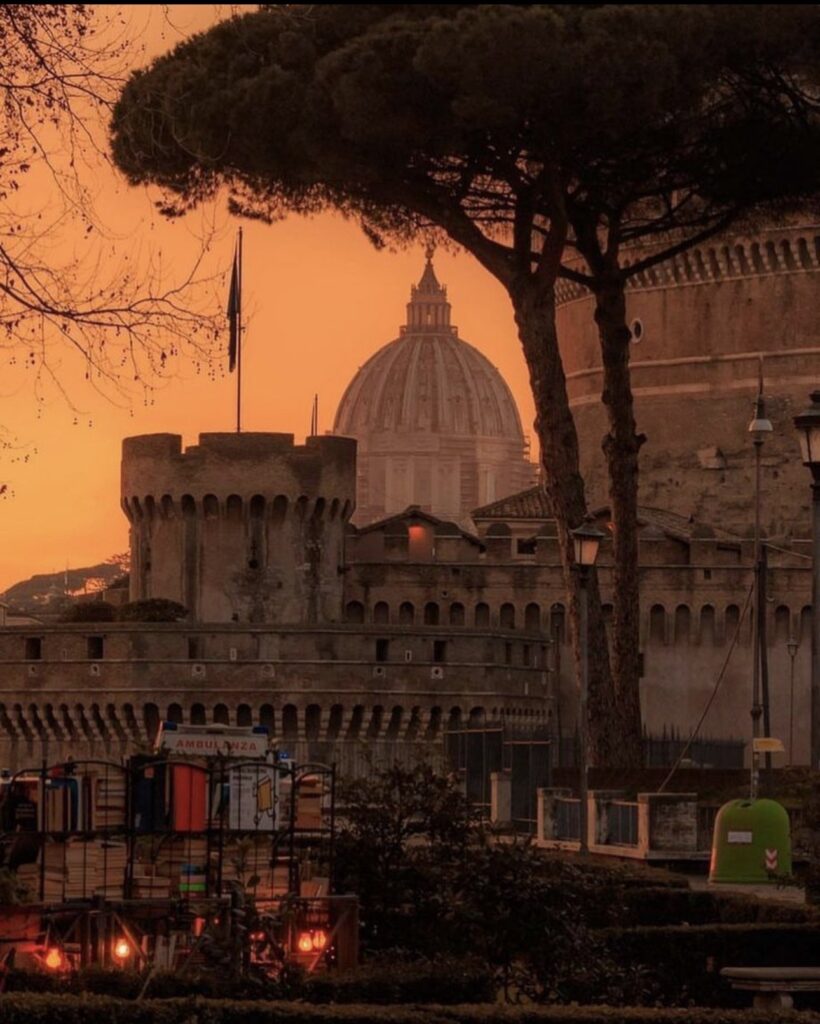
The other strong window runs from May to around 20 June.
The temperatures are still bearable for walking the city, and the light is beautiful. But these are also the most crowded months — partly because people who didn’t travel over winter are itching to go, and partly because, as Nico puts it, the climate simply allows it.
May beats June on temperature. And that gap is widening: recent Junes have been hitting 35–36°C, which is not pleasant when you’re walking for seven hours.
July and August: he doesn’t recommend it
Nico is blunt about the summer peak. It’s a hard no from him.
The heat is serious — we’ve written about exactly how serious — and in August the city empties out. Good restaurants close for the holidays, and you miss a lot of what makes this place worth the trip.
But there’s a distinction worth making, and it’s an important one.
If you can choose your dates, don’t choose August. If you’re already coming in August — because of work, school holidays, whatever — that’s a completely different conversation, and we’ve written that one too. Rome in August has real advantages. It just wouldn’t be Nico’s pick if the choice were free.
When the tourism actually stops
Here’s the rhythm of the year as a taxi driver sees it. And with the Jubilee year now behind us, the exceptional flows that came with it have passed — what follows is the normal rhythm of the city again.
Tourism stops around mid-November, and stays down until roughly the end of March. Not quiet — genuinely down.
Christmas brings it back briefly, from around 22 December to Epiphany on 6 January. Two weeks of movement, markets, atmosphere.
And then, from 6 January to 6 February, Rome is a ghost city.
That’s Nico’s phrase, and he means it as a recommendation.
January: Rome for almost nothing
If your priority is having the city to yourself, this is the month.
The catch is the temperature, and it’s honest: it never really drops below zero, but it gets close. Some January nights touch 6–7°C. Daytime sits around 9–10°C.
Cold, grey and sombre if you’re unlucky with the sun. But as Nico says — it’s hardly an impossible undertaking.
And the prices are the lowest of the year. In his words: January is the month you can see Rome con due spicci — for next to nothing. Hotels cost little, there are all sorts of offers on Booking and Airbnb, because people would rather drop their rates than sell nothing at all. There’s even a slight difference on tickets for the Vatican, the Colosseum and the Pantheon.
February and early December work on the same principle: quiet, cheap, and the city all to yourself.
The explosion: the weekend after Easter
This is the kind of detail only someone working the airports would notice.
Whenever Easter falls — early April, mid, late — the weekend immediately after it, the season detonates.
Nico watches it happen: the airports start bursting, the work explodes, tourism restarts, people everywhere. And from that point the prices climb steadily through to September and October.
March is the last cheap window. It’s a good month to visit and noticeably cheaper than May. Late March into early April, you can still find very good deals.
After that, you’re paying peak.
What the seasons actually feel like
Spring sits right at the start of the season. Ideal for temperature and for everything else.
Autumn, though, is the one Nico loves.
The city offers beautiful colours. The climate is exactly right — a light jacket in the evening, a sweatshirt in the afternoon. You don’t need to dress heavily to visit, which matters when you’re walking all day.
The only risk is heavy rain. And nobody can predict that when they book. But Rome isn’t a city where it rains constantly — you’ll get the occasional storm, not a washout. As Nico points out, he has friends who paid a fortune for the Maldives and got seven days of rain out of ten. Weather is a lottery anywhere. Rome just has better odds than most.
If you’re coming for the events
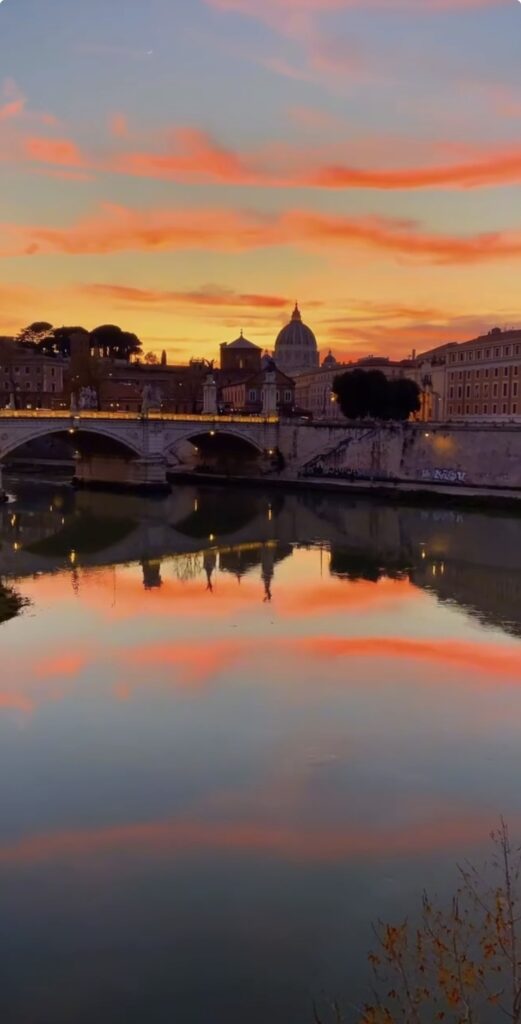
Almost everything is concentrated between May and September. The exceptions are the Christmas markets and Holy Week at Easter.
In that window: concerts, open-air events, exhibitions, museums. Circo Massimo hosts a huge amount of it.
The 1 May concert — the concertone — is free and open to everyone. The line-up is Italian, so how much you know of the music depends on you, but it’s a relaxed, mixed crowd of all ages and a good place to meet people.
There are also free museum days, a beer festival, and a steady stream of things happening through the summer.
(We’ll cover the events calendar properly in its own article.)
So: when should you come?
It depends on what you’re optimising for.
Best overall experience → 20 September to 15 October. Nico’s pick, and ours.
Beautiful weather, don’t mind crowds → May to 20 June. May over June.
Cheapest possible trip → January and February. Cold, grey, and yours.
A good compromise on price → March into early April, before the post-Easter surge.
Avoid if you can choose → July and August.
The short version
- Nico’s answer: 20 September to 15 October. Weather, crowds and prices all cooperate
- Late September: 24–26°C by day, 14–16°C at night. Early October: 23–25°C and 14–16°C
- Summer here has stretched by nearly three weeks — and Romans have always had a word for warm October days: ottobrate
- May–20 June is excellent but busy. May beats June on heat
- July–August: not his pick. But if you’re already coming, that’s a different article
- Tourism drops from mid-November to end of March, apart from Christmas to Epiphany
- 6 January to 6 February: a ghost city. Nights 6–7°C, days 9–10°C. Cheapest month by far
- The weekend after Easter, the season detonates — the airports tell him first
- Autumn is the loveliest: light jacket in the evening, sweatshirt in the afternoon
- Events run May to September, plus Christmas markets and Holy Week
Common questions
Is October a good time to visit Rome?
Arguably the best. Days sit around 23–25°C into early October, the summer crowds have gone, and prices come down from the September peak.
Is Rome crowded in September?
Busier than October, far quieter than August. The first half of the month still feels like high season.
More real Rome, one honest tip at a time — callmeitaly.com