How Many Days Do You Need in Rome? An Honest Answer
Let’s start with the number, because you came here for the number.
Five days. That’s what Nico says, and he’s blunt about it: not fewer than five.
Now let’s talk about why — and what to do if you haven’t got five.
Rome is bigger than the map suggests
Here’s the thing people underestimate before they arrive.
Rome covers around 1,300 square kilometres and holds close to three million inhabitants. It’s the largest city in Italy and among the largest in Europe — not just in population, but in sheer physical space.
On a map, getting from point A to point B looks simple. On the ground, the real distances tell a very different story. And then there’s traffic, which is a variable you have to account for whether you’re in a taxi, on a bus, or crossing a road on foot. (Here’s how the transport system actually works, if you’re planning routes.)
This is why two days feels so tight. It isn’t that you can’t see things in two days — it’s that Rome doesn’t shrink to fit your schedule.
The mistake we’d most like you to avoid
Please don’t plan your days to the minute.
We see it constantly: Colosseum at 10, then move to the Pantheon by midday. That level of precision is, honestly, one of the biggest mistakes you can make on this trip.
Because there are variables you cannot control. What day of the week it is, and therefore how much traffic and how many tourists. What time of year — a September afternoon and an August one are not the same trip. A sudden burst of rain that costs you an hour.
What we’d suggest instead: pick two or three key stops a day — four at absolute most — and enjoy them properly.
Because what Rome offers has to be lived and breathed, not simply photographed for Instagram.
There’s a saying here that everyone in the world knows: Rome wasn’t built in a day. People use it as a proverb about patience, and that’s exactly the point — beautiful things aren’t meant to be rushed, they’re meant to be enjoyed. So imagine us advising you to see the whole of it in two. It would be madness.
If you only have two days
It happens. You’re passing through, or Rome is one stop on a longer trip. Nico won’t turn you away — here’s how he’d split it.
Day one: the Vatican. Nico is specific about this one: it’s a half day, minimum — the Museums, the Sistine Chapel and St. Peter’s are not something you squeeze into a couple of hours. It’s also the most demanding stop of the lot, which is why it gets the morning and your freshest energy.
If you still have an afternoon left in you, walk to the Pantheon.
Day two: book the Colosseum and the Roman Forum for the morning — book it, don’t turn up hoping. (The ticket runs around €40 and covers all three sites.) That’s a lot of history and it deserves the time.
Then, with what’s left of the day, walk. Via del Corso, Piazza di Spagna, Piazza del Popolo. And then you go home, because your two days are over.
What you’re accepting: you’ll see the three or four things everyone comes for, and you will necessarily leave everything else behind. That’s the deal with two days. Nico’s summary is simple — with two days, you’re racing the clock.
Three days: the minimum that feels sane
Add one day and something changes. You’re no longer racing.
Vatican, Colosseum, Pantheon — the three Nico considers the essentials — now have room to breathe. And the extra day lets you take a proper walk between them, rather than sprinting from one to the next.
It’s still not enough to see Rome. But it’s enough to enjoy the part of Rome you do see, and that’s a completely different holiday.
Five days: the way it should be done
This is Nico’s recommendation, and the structure is simple: roughly one major thing a day, with time around it.
- Day 1 — the Vatican. The heaviest day. Get it done while you’re fresh.
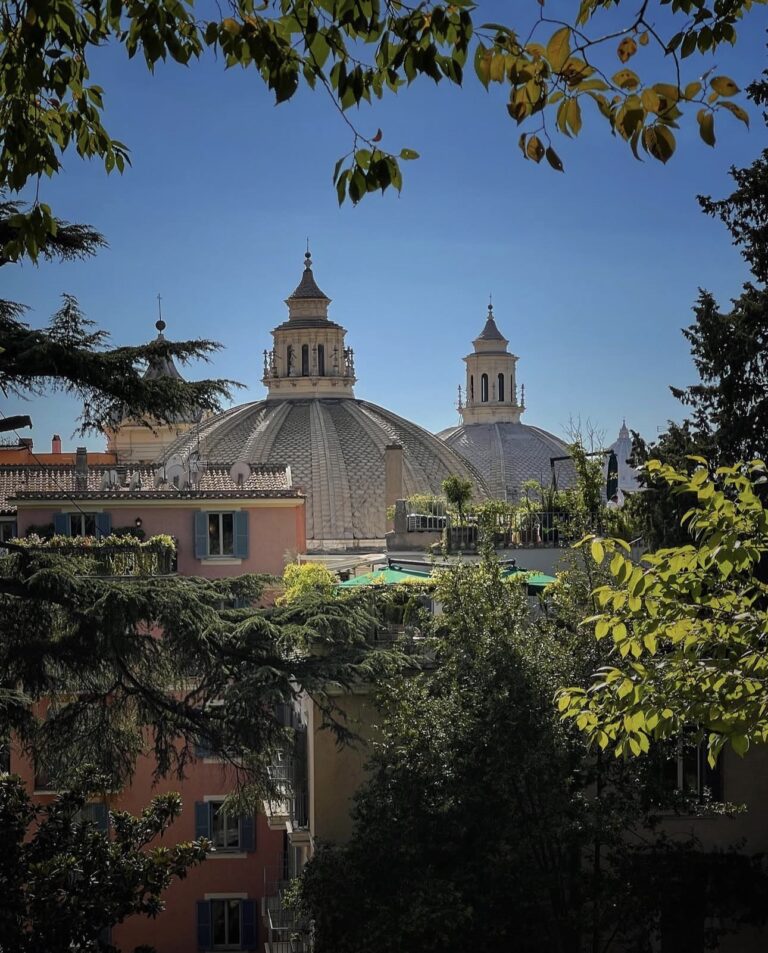
- Day 2 — the centre and the Pantheon, then a walk up to Piazza del Popolo.
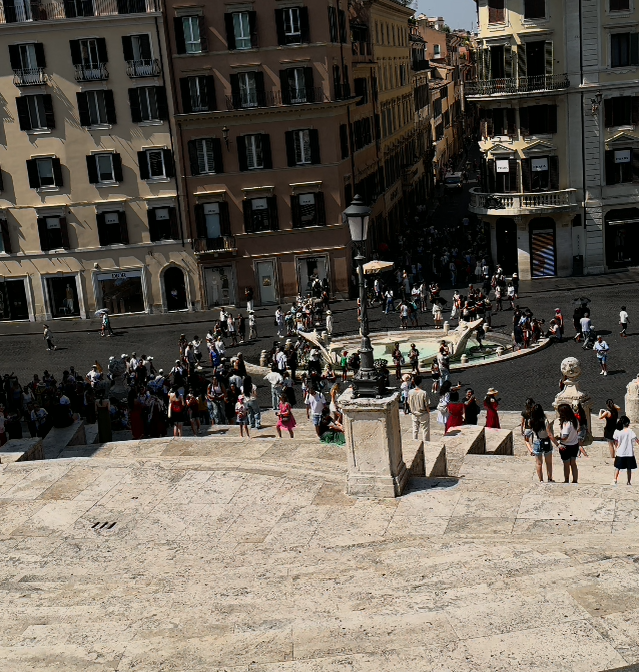
- Day 3 — Piazza di Spagna and Trinità dei Monti, and another long walk.
- Day 4 — the Colosseum and the Roman Forum. Serious history, worth a full slot.
- Day 5 — pick from the list below. These are the things that fall off the itinerary first, and the fifth day is what buys them back.
What you miss when you rush
Think of these as a pool to choose from rather than a route — they’re scattered across the city and you won’t fit them into a single day. But one of them is genuinely remarkable.
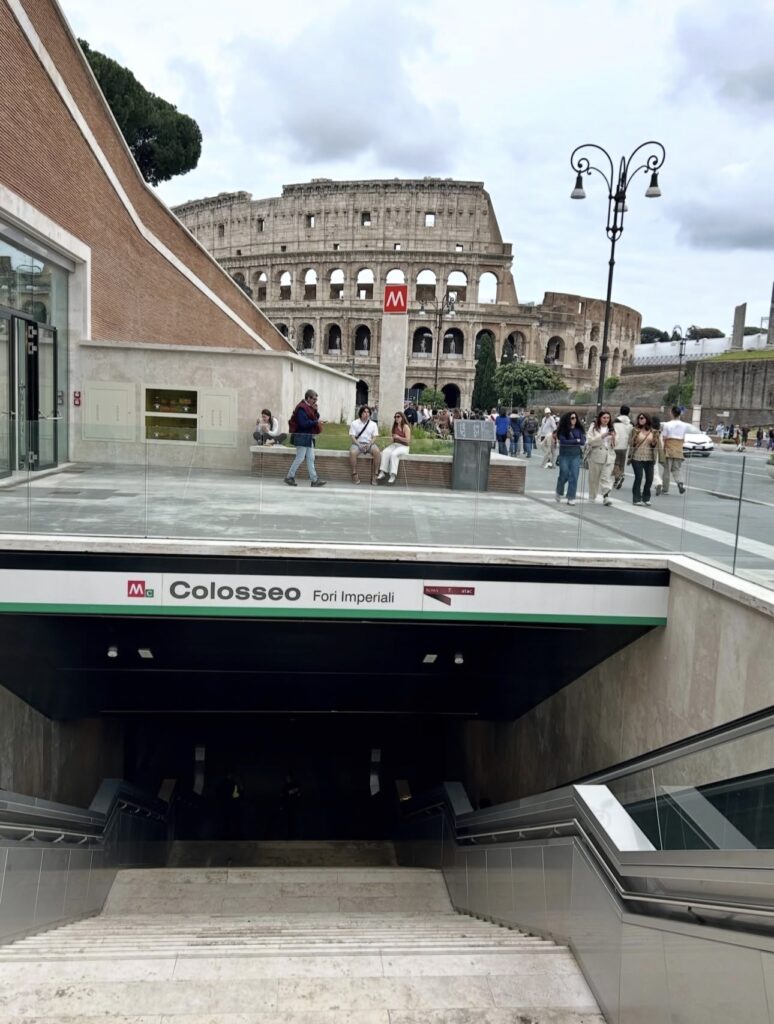
The Colosseo metro station. Yes, the metro station.
When they excavated to build it, the digging turned up an enormous quantity of finds — amphorae, objects large and small, the ordinary debris of ancient Roman life. And rather than move it all to a museum somewhere across town, they put it on display inside the station itself.
So the stop is effectively an underground museum, free to walk through, sitting right beneath one of the most visited monuments on earth. Nico’s advice is to go in and happily lose an hour there. We’d second that — and we’ve never seen it in an English-language guide.
The Gianicolo, for one of the best views over the whole city.
Villa Borghese, which is an enormous, beautifully kept park — the kind of place where an afternoon disappears without you noticing.
Santa Maria Maggiore — one of Rome’s four papal basilicas, famous for its fifth-century mosaics, and since 2025 the burial place of Pope Francis.
And one more, which is a personal note from Nico: everyone assumes his favourite monument is the Colosseum. It isn’t. It’s the Altare della Patria and the Campidoglio.
Practical note: the Colosseo metro station and the Campidoglio sit within easy walking distance of each other, so those two pair naturally into one afternoon. The Gianicolo and Villa Borghese are on the other side of town — treat them as separate outings.
The advice we’d actually give you
Here’s the part that matters more than any itinerary.
Breathe the air. Listen to the sounds of the city. And don’t obsess over the map — because the most precious gift Rome can give you is hidden behind some alley you weren’t planning to walk down.
The most romantic thing you can do here is get lost.
Step off the main streets. Take the narrow lanes nobody talks about. That’s where you’ll find the real essence of this city — the things you didn’t know existed, that no itinerary would ever have sent you to.
And don’t worry about finding your way back.
All roads lead to Rome.
The short version
- Five days is the ideal. One major thing a day, with room around it
- Three days is the sane minimum — the essentials without racing
- Two days: Vatican + Pantheon, then Colosseum + Forum, then a walk. You’ll miss the rest
- Rome is 1,300 km² — the map lies about distances, and traffic is a variable
- Don’t plan to the minute. Two or three stops a day, four at most
- Don’t miss the Colosseo metro station — an underground museum, free
- Get lost on purpose. That’s where the city actually is
Common questions
Is 2 days enough for Rome?
Enough for the essentials, not for the city. You’ll manage the Vatican, the Colosseum and the Forum, and a walk through the centre — and you’ll leave everything else behind. A Roman would tell you three is the sane minimum.
How many days do you need to see Rome properly?
Five. That’s one major site a day with time to walk between them, which is how this city is meant to be seen. Fewer than that and you’re choosing what to sacrifice.
How long do you need at the Vatican?
Half a day, minimum. The Museums, the Sistine Chapel and St. Peter’s together are not a two-hour stop — give it a full morning while you’re fresh.
More real Rome, one honest tip at a time — callmeitaly.com