How to Spot a Tourist-Trap Restaurant in Rome
Let’s start with something you won’t hear often from a food guide.
A €25 carbonara behind the Colosseum is not a scam.
Think about what that restaurant pays. Rent in that kind of location runs into thousands upon thousands a month, before staff, before suppliers, before a single plate leaves the kitchen. You’re not just paying for pasta — you’re paying for the view, and the view has a price. That’s fair. We’d pay it too.
So no, the price isn’t the problem.
The problem is what that pressure does to the food.
The real damage: pressure changes the plate
When running costs squeeze a restaurant hard enough, something has to give. And what gives first is almost always the quality of what ends up in front of you. Cheaper ingredients. Shortcuts in the kitchen. Dishes made in advance and reheated.
But there’s a second thing that happens, and to us it’s far worse.
They start giving people what they think people want.
The cream in the carbonara
Here’s what we mean.
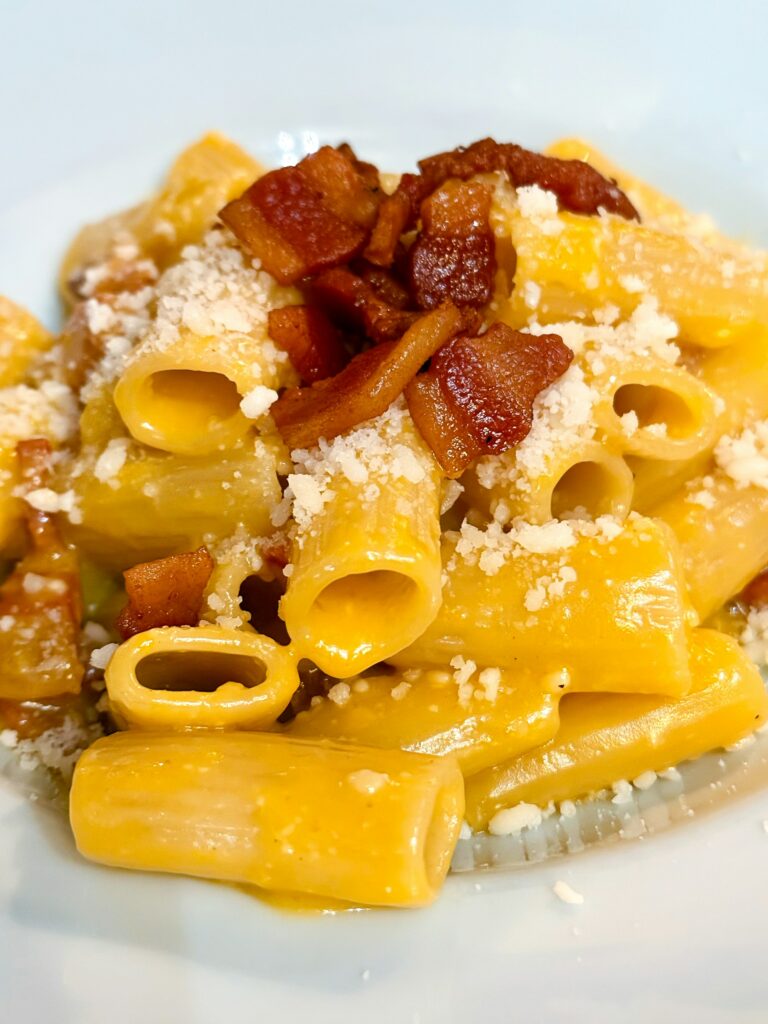
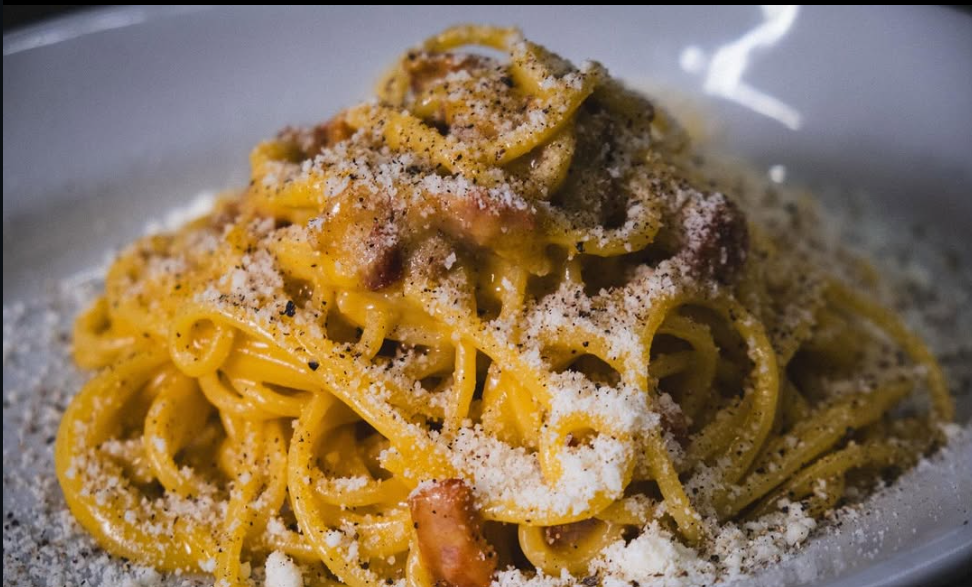
If you order a carbonara in London, there’s a decent chance you’ll find something in the plate that has no business being there. Cream. The wrong cut of pork. Something added to make it “creamier”, “safer”, more familiar.
Now some restaurants in Rome do the same thing — on purpose. They put the cream in. They soften the recipe. They make it taste like the version you already know, so you feel comfortable, so you come in, so you stay.
And we find that genuinely wrong.
Because think about what it means. You’ve travelled to Italy — a country whose entire existence is built around food, from what we grow to what we export to how we sit down together. You’ve come to the capital. And someone hands you a distorted version of a recipe that carries history and tradition behind it, just to make you feel at ease.
We don’t want to make you feel at home like that.
We want to make you feel at home in OUR home.
That’s a completely different thing. One is pandering to pull you in. The other is hospitality.
Reading a place from the outside
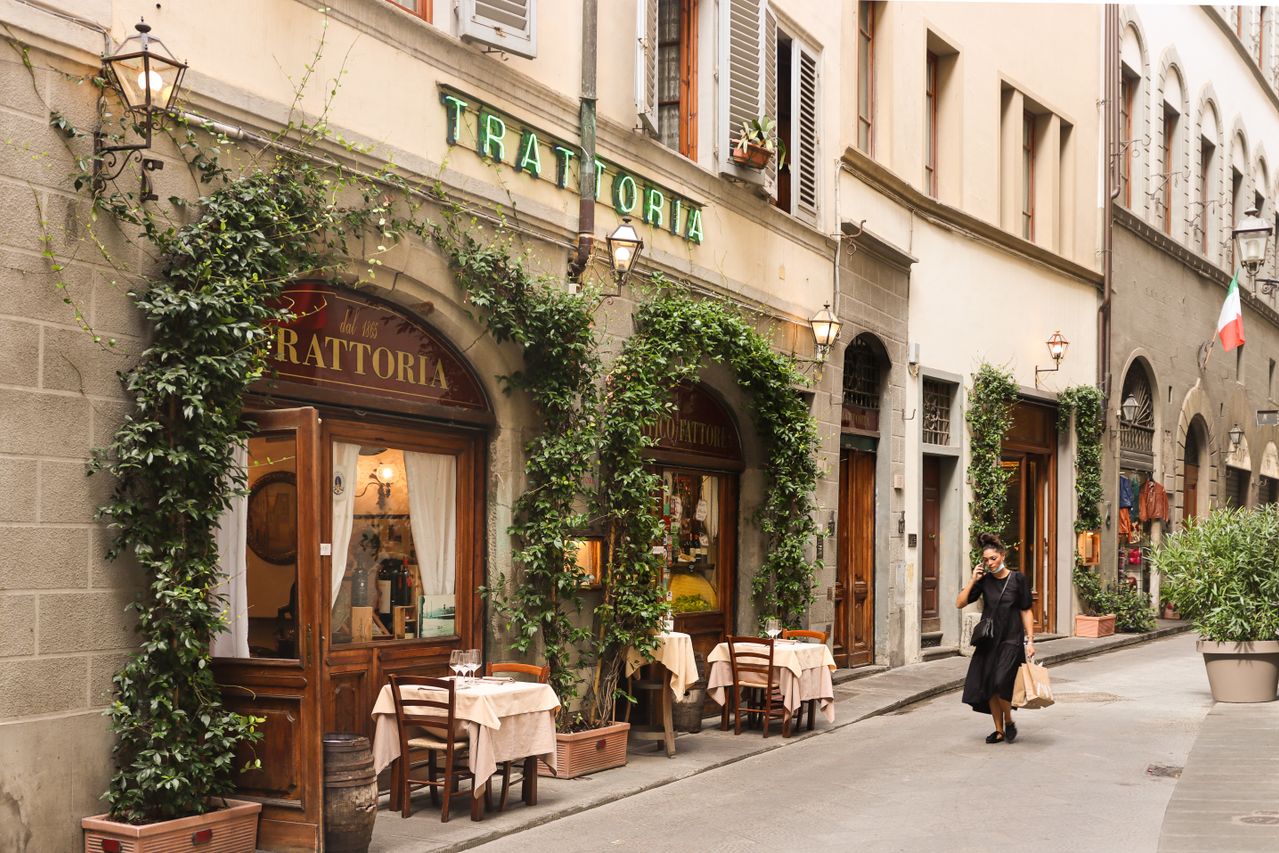
You can tell a lot before you ever sit down. Here’s what makes us walk on.
The chalkboard with photos of the food. If a kitchen needs to show you a picture of carbonara, ask yourself why. People who do their job well don’t need to prove it in pictures — they write it down and let the plate speak.
Someone standing outside pulling you in. The buttadentro, we call him. A restaurant that has to catch you by the sleeve on the street is telling you something about how many people choose it on their own.
Menus in eight languages, with English first. A translated menu isn’t a crime — plenty of honest places have one. But when the whole front of the restaurant is built in English, when the Italian is an afterthought, you’re not looking at a Roman trattoria. You’re looking at something built for people passing through once.
Reading a place from the inside
Our friend Nico — a Roman who’s spent his working life driving people around this city — has his own checklist. It’s simple and it works.
The menu is written, not photographed. Handwritten if possible. And crucially: the same menu outside as inside, with the prices shown. No surprises.
The staff wears a proper uniform. Everyone dressed the same way. The waiter is the first calling card of a restaurant — you can read the whole place in how the staff is turned out.
It feels clean. Not spotless-fancy. Just clean, in a way you register immediately. If it doesn’t give you that feeling, walk away. A bad meal is an experience you carry home with you, and that’s not fair on you.
Few dishes, done properly. Seven or eight first courses, seven or eight seconds. Ingredients that overlap and make sense together. Be suspicious of the place with a thousand options and five different cuisines under one roof — nobody can do all of that well.
Trust your gut. Nico puts it plainly: in Rome there are people who cut corners, but there are at least twice as many who do it right. Your instinct usually knows which one you’re standing in front of.
The one rule that covers everything
If you remember nothing else, remember this.
Choose places that respect traditional Italian cooking.
That’s the whole filter. Because here’s the thing — and it sounds like a paradox, but it isn’t: even in the most modest, unremarkable place, if the kitchen respects the tradition, you will eat well. A simple trattoria that makes cacio e pepe the way it’s supposed to be made will give you a better meal than a beautiful restaurant that’s decided to improve on four hundred years of practice.
Respect for the recipe is the signal. Everything else follows from it.
The short version
- Price alone doesn’t tell you much — location costs money, and that’s fair
- Watch for photos on the menu, someone pulling you in from the street, and English-first everything
- Inside: handwritten menu, prices shown, staff in uniform, few dishes, clean
- If a place changes a classic recipe to make you comfortable, that’s not hospitality
- Respect for tradition is the one signal that never lies
Now go eat something proper. And if you find a place that gets it right, tell them a Roman sent you.
Common questions
How do you spot a tourist trap restaurant in Rome?
Photos of the food on the menu, someone outside pulling you in, and an English-first menu are the three signals from the street. Inside: a handwritten menu with prices shown, staff in uniform, and few dishes done properly.
Is €25 for a carbonara near the Colosseum a rip-off?
Not necessarily. Rent in that kind of location runs into thousands a month — you’re paying for the view as much as the pasta. The real problem isn’t the price, it’s what cost pressure does to the food.
Does real carbonara have cream in it?
Never. If a Roman restaurant puts cream in your carbonara, it’s softening the recipe to match what it thinks you already know — and that’s the clearest sign you’re somewhere built for tourists.
Now you know how to spot the real thing. Want to know where WE eat?
Get our free guide — the spots Romans actually go to, no tourist traps.
Still got a question about Rome? Ask a Roman — we answer the good ones on the site.
More real Rome, one honest tip at a time — callmeitaly.com