Rome in Summer: How to Survive the Heat (2026)
We asked two travellers on their way back to London a simple question: what’s the one thing you wish you’d known about Rome before coming?
They didn’t say the queues. They didn’t say the prices.
They said the heat.
Nobody expects it. Not even us.
Here’s the part that surprises people: a Roman doesn’t expect it either.
Ask anyone who’s lived here long enough and they’ll pull up the same memory — summer evenings that were genuinely pleasant, afternoons you could spend outside without a second thought. We remember going out at two or three in the afternoon for a bike ride, and it being a perfectly reasonable thing to do.
Not anymore.
The heat has changed. It’s more aggressive now, and it comes backed by a humidity level worthy of a tropical forest. Rome has become one of the hottest cities you can visit.
And we’re not being dramatic. The asphalt burns. It gives off a smell of tar. There are days when flip-flops start to soften and stick as you walk on them. That isn’t a scene from a disaster film or a slogan about global warming — it’s just what happens here now.
The numbers, so you can plan properly: through the peak of summer we sit regularly between 34 and 37°C, with peaks touching 40. But the temperature alone doesn’t tell you the story — it’s the humidity. It runs very high here, which is why the perceived temperature often climbs above the actual one.
And then there are what we call tropical nights: nights when it simply doesn’t drop below 27°C, not even at three in the morning. Check any weather site before you travel and you’ll see it for yourself.
The hours that matter
From midday to three in the afternoon, exploring becomes genuinely difficult — especially if you’ve come from a cooler country and your body has no reference for this.
But here’s the thing worth knowing: that’s also when you’ll find Rome at its quietest. The streets empty out. The noise drops. The city takes a breath.
So don’t fight it. Use it.
That window is the perfect time for one of two things: an escape to the sea, or a couple of hours somewhere air-conditioned. A shopping centre is not a romantic recommendation, we know — but at 2pm in August it’s a rather sensible one.
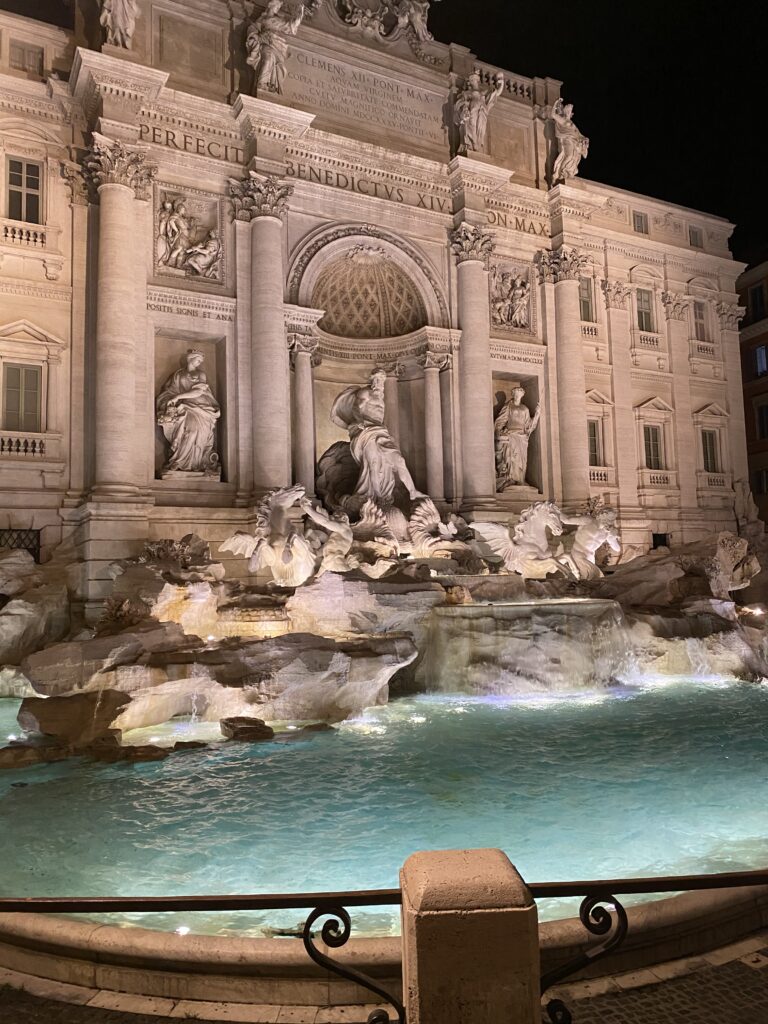
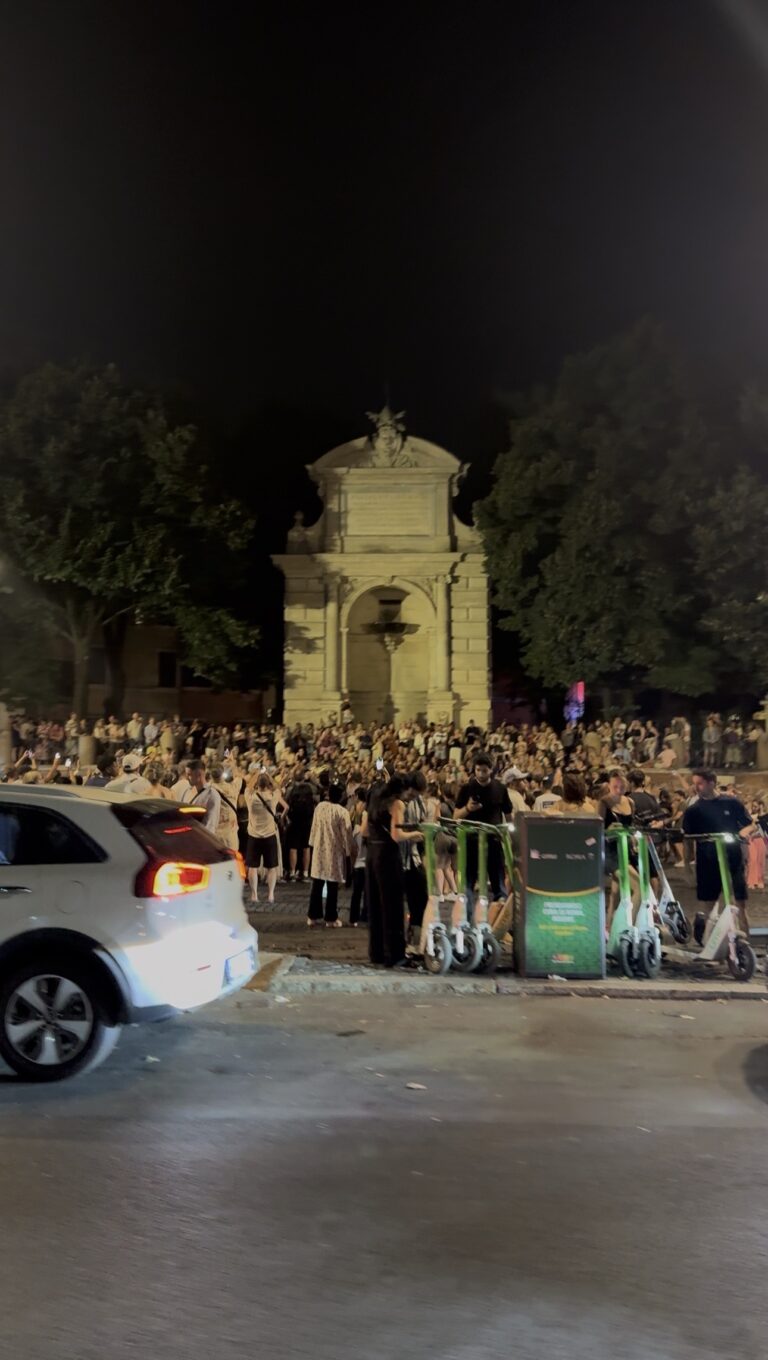
Then come back out at five, when the city does too. And if you’re heading to the Trevi Fountain, wait until after ten — it’s cooler, emptier, and the basin is free at that hour.
Where Romans go: the sea
When the city gets unbearable, we leave it. And Romans split into two camps, depending on which side of the city they live on.
North: Ostia, Fregene, Fiumicino, Santa Marinella. All good, and Santa Marinella especially — the water there is genuinely clean.
South: Torvaianica, Anzio, Lavinio, Nettuno. Just as good, with one place that stands apart: the Grotte di Nerone at Anzio. It’s one of the wildest, most natural stretches of coast anywhere near Rome. We love it for the quality of the water, for the facilities, and for the setting it sits in.
But be realistic about time. Any of these takes a good half day out of your trip, minimum. So it depends entirely on how many days you have.
If you’re short on time, Ostia is the answer. Kilometres of free public beach, and you get there directly by train — no car, no planning. On accessibility alone it beats everything else.
The nasoni: free water, everywhere
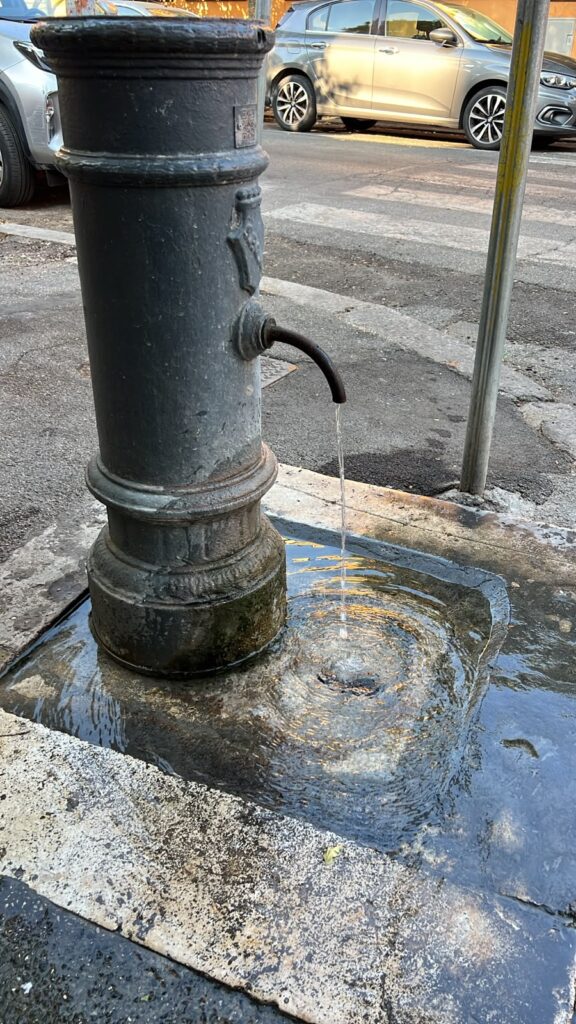
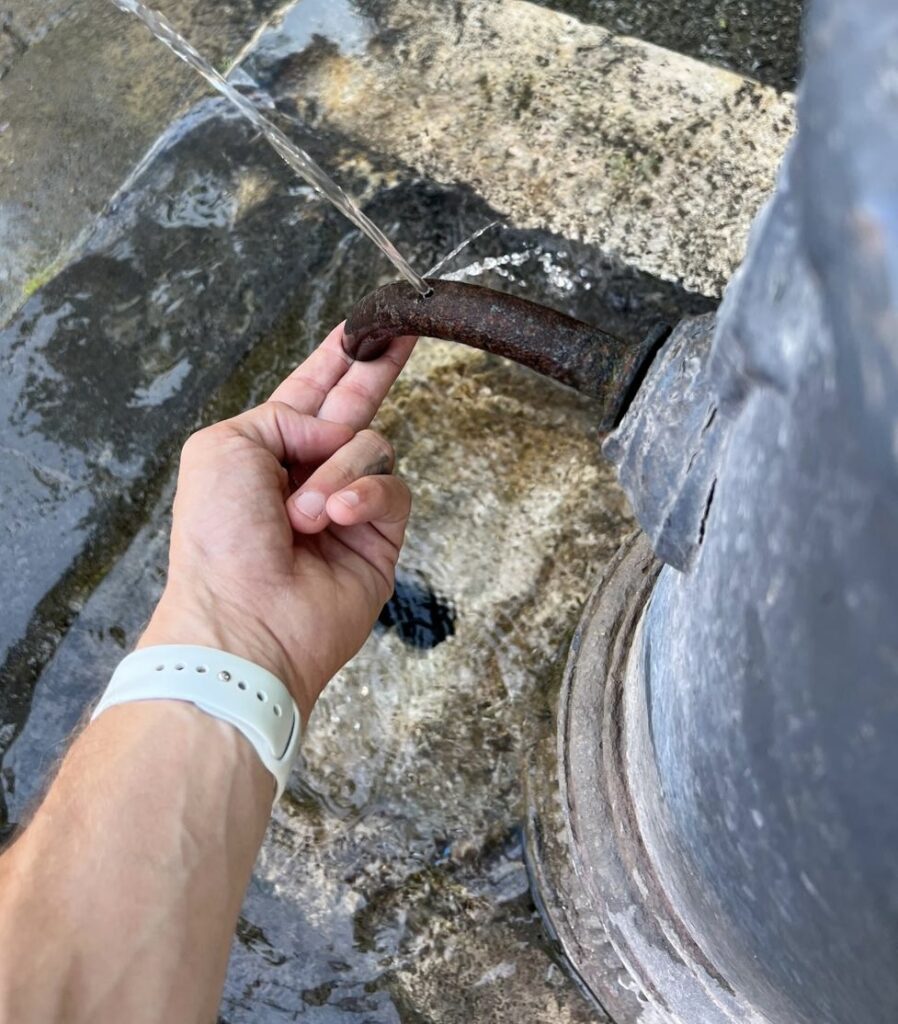
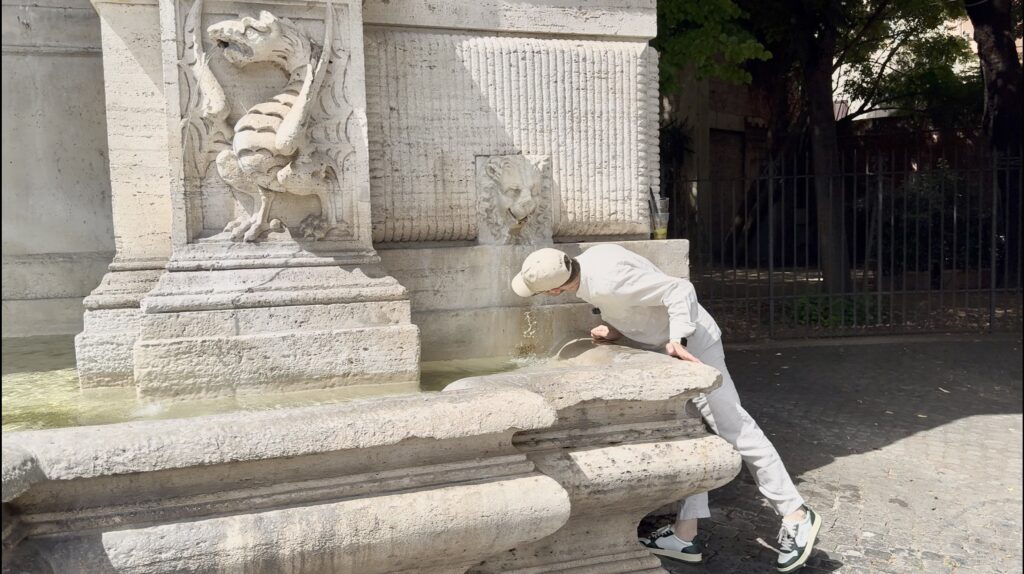
Rome is full of fountains, and full of what we call nasoni — the small cast-iron street fountains running constantly with cold, drinkable water. They’re all over the city, and they are free.
There’s something we find quietly beautiful about them. The aqueducts feeding this city are ancient Roman structures. It’s as if our ancestors, all that time ago, worked out that one day we’d need the help.
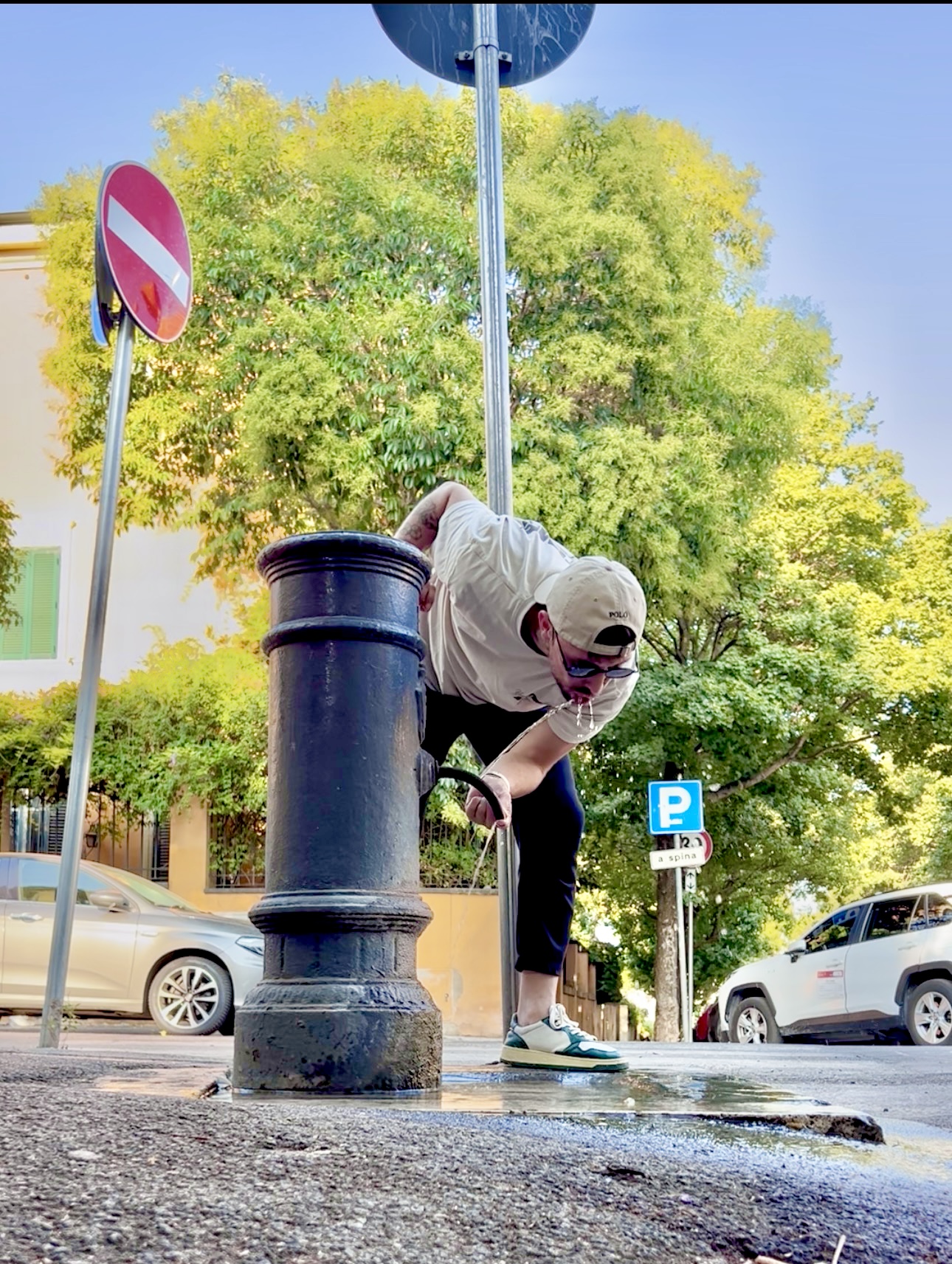
How to drink from one, the way we all do it: press the palm of your hand against the spout, blocking the water. It shoots up through a small hole on top of the pipe, at exactly the right height to drink from. That’s it. Every Roman does it the same way, and it’s honestly one of the nicest habits this city has.
And the water is worth it. L’acqua de Roma nun se batte — Rome’s water can’t be beaten. It’s the reason the coffee here comes out as good as it does.
Practical translation: don’t buy bottled water every time you’re thirsty. Bring a refillable bottle and top it up as you walk. Over a few days in July, that’s a meaningful amount of money — and it’s better than anything you’d pay for.
Where to go when you can’t take it
Not all of Rome cooks equally. Where you are matters enormously.
Trastevere is, in our view, one of the few areas that stays explorable at almost any hour. The dense greenery wrapping the neighbourhood creates real shade — you can move through it in the middle of the day without feeling punished.
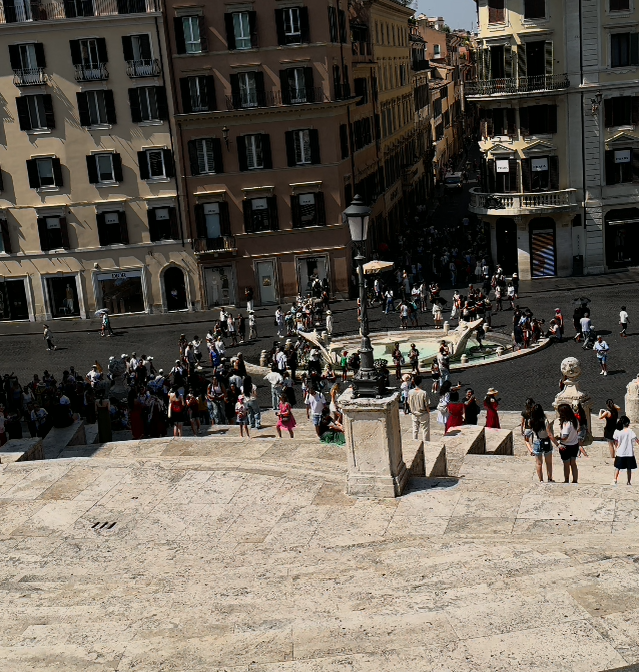
Compare that with Piazza di Spagna, sitting exposed to direct sun with nowhere to hide. Same city, completely different experience.
It’s also why eating on the go makes sense in summer: a slice and a shaded bench beats sitting in the sun waiting for a table.
Churches are the other answer, and an underrated one. Thick stone walls, no direct light, cool inside. You’re going to visit them anyway — just visit them at the hottest part of the day instead of the coolest.
Plan your day around the sun
Simple advice, but it’s the difference between loving Rome and enduring it.
Do the outdoor things in the morning or the evening. The Roman Forum, the Colosseum, Piazza di Spagna, Via del Corso — these all involve a lot of walking, and you do not want to be doing that under a hammering midday sun.
Use the 12 to 3 window for indoor things. Museums. Guided tours under a roof. Churches. It’s the same time the city goes quiet anyway, so you’re not missing anything.
And get yourself something cold. A proper artisanal gelato, or better still a grattachecca — shaved ice with fruit syrup poured over it. It’s a Roman institution, it’s delicious, and on a July afternoon nothing else comes close. The same rule applies as everywhere else in this city: pick the place carefully.
Check the air conditioning before you book
This one catches people out, and it’s easy to avoid.
As in plenty of old cities around the world, a lot of Rome’s accommodation sits inside historic buildings — and not all of them have air conditioning. It isn’t a given here the way it might be at home.
So read the listed amenities properly before you book. After a day at 37°C, a room you can’t cool down is the difference between a good trip and a miserable one.
The mistake we see most
A visitor arrives in the country of fashion, and understandably wants to dress for it. The outfit is planned. The idea is to walk the streets of the centre looking the part.
They have no idea what they’re walking into. And we hope they work it out in time.
Bring what breathes. Bring what you can walk ten kilometres in. Rome will still be beautiful in your photos, and you’ll still be standing at six in the evening — which is when this city actually starts being wonderful.
The short version
- The heat here has changed — even Romans are caught out by it
- Regularly 34–37°C with peaks of 40, and humidity that pushes the perceived temperature higher
- Tropical nights: sometimes it doesn’t drop below 27°C even after dark
- Midday to 3pm: don’t explore. Go to the sea, or somewhere with air conditioning
- Rome is at its emptiest and quietest in those hours
- Nasoni are everywhere and free — carry a refillable bottle
- Trastevere holds shade. Piazza di Spagna does not
- Churches are cool inside. Save them for the worst hours
- Outdoor sights in the morning or evening; museums and indoor tours from 12 to 3
- Grattachecca — shaved ice with fruit syrup — is the best thing you’ll drink here
- Short on time and want the sea? Ostia — free beaches, direct by train
- Check your accommodation actually has air conditioning
- Dress for walking, not for the photos
The city comes back to life around five. So do the people in it.
One last thing
We’re not telling you to avoid Rome in summer. Quite the opposite — we think summer is the best season this city has.
We just want you to arrive aware, and clever about the temperature. Do that, and July in Rome is something you’ll remember for the right reasons.
Common questions
How hot does Rome get in summer?
Regularly between 34 and 37°C, with peaks touching 40. The humidity is what catches people out — the perceived temperature often climbs above the actual one, and some nights don’t drop below 27°C.
Can you drink the water from Rome’s fountains?
Yes. The cast-iron street fountains called nasoni run cold, clean drinking water continuously, all over the city, for free. Press your palm against the spout and the water rises through a small hole on top, at drinking height.
What should you do in Rome during the hottest hours?
Don’t explore between midday and three. Use those hours for museums, churches or somewhere air-conditioned — or escape to the sea. The city is at its emptiest then anyway, and it comes back to life around five.
More real Rome, one honest tip at a time — callmeitaly.com